A Best-Selling Author Told Me Not to Wait. Here's What Happened When I Listened.
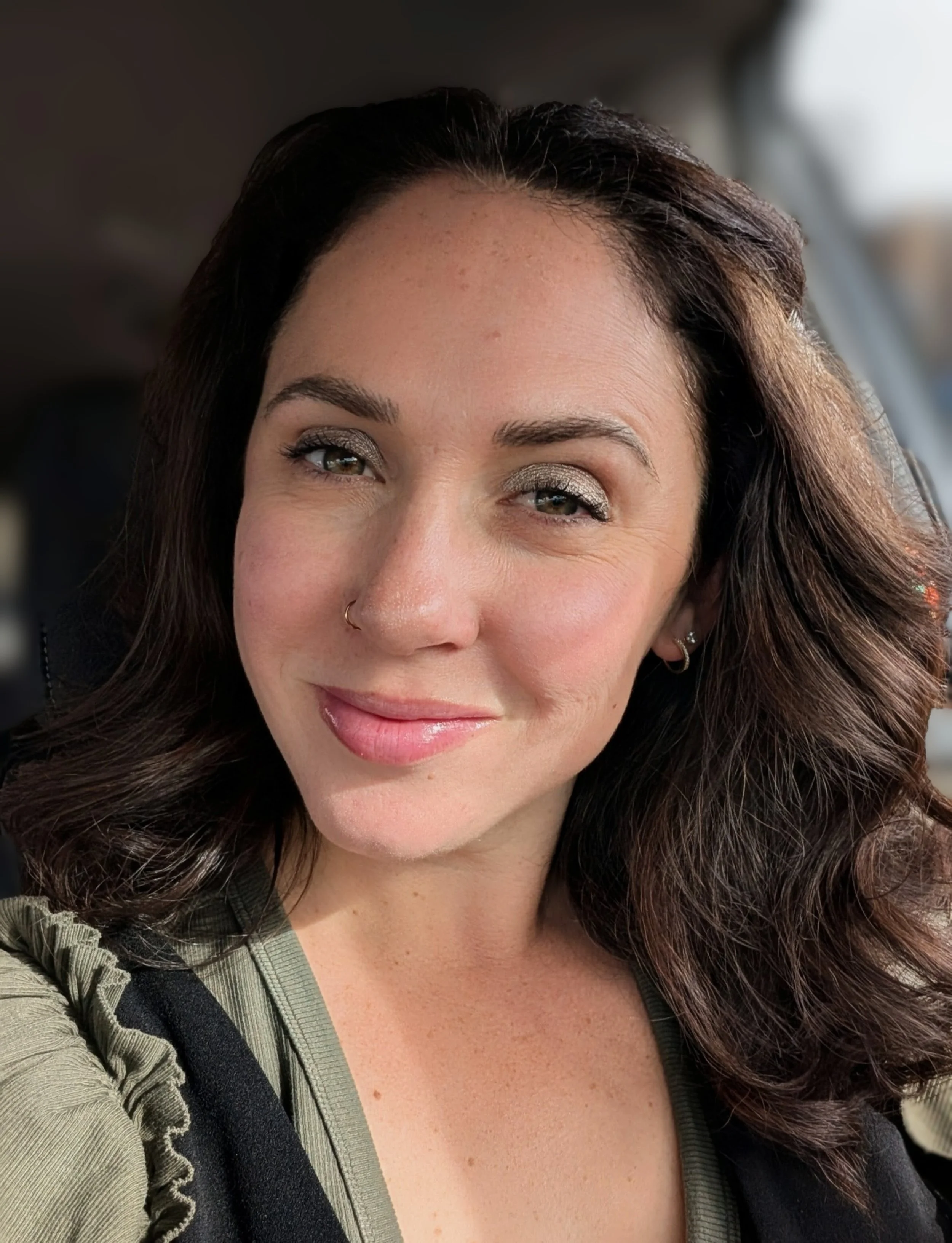
Historian and Ghostwriter Katie Ludlow Rich
Many of the people I work with have been carrying their story for years, telling themselves they'll write it down someday—when there's more time, when things settle, when they finally feel ready. I know what that waiting feels like. Here's the moment I stopped.
In 2019, I attended a writing conference in Provo, Utah. After a best-selling author led a powerful workshop, I waited in line to thank her. When it was finally my turn, the words I'd rehearsed evaporated. My throat tightened and my eyes brimmed with tears. Sensing my distress, she gently steered me out of the room to privately ask me what was going on. I bit the inside of my cheek, determined to keep my composure, but within seconds, I was full-on ugly crying in front of this author who didn't even know my name.
I was on the brink of a significant change, but saying it out loud suddenly felt impossible. I had attended this same conference two years earlier, and now I was back, having completed a draft of my first novel. I'd sent it out to several agents, received a few requests for the full manuscript, and was waiting to hear back. In the meantime, I'd already begun work on a second novel.
That second novel included a character who was a history professor. As I developed her backstory, I felt an internal tug. I realized I didn't actually want to write this character. I wanted to be her. I wanted to be a historian.
That realization may not sound shocking coming from someone with a bachelor's degree in history and a master's in English. But at the time, I was a stay-at-home mother of four, including a one-year-old. I had been raised to believe that motherhood was my only proper role, and that pursuing a career was selfish at best. Could I really even consider wanting more?
It had taken me three years to finish my novel, written almost entirely in small scraps of time late at night. When I told people I was writing fiction, they often smiled and said how nice it must be to "do something for myself." The comment felt patronizing. It suggested that creative work was permissible for a mother only if it remained a harmless side project—something not meant to be taken seriously. Going back to school would mean doing exactly that: taking my work seriously.
Why does it feel so hard to take ourselves seriously? Why is it so vulnerable to even name what we want?
There were other things happening in my life that complicated that moment, but as I tried to explain myself to the author, I found myself unraveling. I told her that I wanted to switch from writing fiction to writing history. I already had ideas for an article that could serve as a writing sample for graduate school and for a research area I hoped to pursue.
But as a mother of four, my time and resources were limited. I couldn't do everything. I would have to choose where to put my energy. And if becoming a historian was truly what I wanted, it meant letting go of something else. It meant, at least for now, stopping my work on fiction. It meant a pivot.
The author listened kindly as I sputtered through my tears. I'm sure she was puzzled by why I had chosen her to confide in, but to me, it felt less like a choice and more like an eruption of things that I'd been bottling up for months. Saying it out loud felt like a claiming of what I wanted to do and who I hoped to become.
Once she understood the shape of my dilemma, her demeanor shifted. She grew serious and asked what I wanted to write about. I told her. She placed a hand on my shoulder and said, simply, "Don't wait for your PhD to write about this. Write it anyway."
Write it anyway.
Her words stopped me short. Did she think I wouldn't get into the program? That didn't seem right. Was she suggesting that I could research and write meaningful work before earning the degree—that I could begin doing the work I wanted to do simply because I wanted to do it, without waiting for external validation? The work I wanted to do was not like brain surgery. While there are standards, expectations, processes, and gatekeepers, publishing scholarly articles and books does not actually require a PhD.
Back in my hotel room that night, I wanted to disappear into the floor, mortified by having fallen apart in front of that author. But her advice stayed with me. It planted a seed: write it anyway.
I mapped out a five-year plan to apply to a PhD program, timed for when my youngest started first grade. But I didn't wait to begin the work. I started researching right away. One early topic led me to a source that sparked an idea, which grew into something closer to an obsession. That work became the award-winning article I published in the Spring 2024 issue of the Journal of Mormon History: "The Shadow Succession Crisis: Challenging the Claim that Brigham Young Disbanded the Relief Society in 1845."
Of course, I didn't write or publish that article alone. It exists because of the many people in the Mormon Studies community who were generous with their time in offering feedback, guidance, and encouragement, and saying yes to me at crucial moments along the way. But I wonder, would I have had the courage to begin if that author hadn't told me not to wait for the PhD to take my work seriously?
Allowing myself to say out loud what I wanted and deciding to pursue it led me to places and people that brought additional opportunities, including writing the award-winning book Fifty Years of Exponent II with Heather Sundahl. But in the years since that 2019 writing conference, I've pivoted again.
As my youngest child approached first grade, the reality of beginning a graduate program became less appealing than I had imagined years earlier. Family life was no less demanding, the nearest program was an hour away, and the financial and logistical costs were significant. As I spoke with more people in the field, I also came to see that, depending on the path I wanted to take, a PhD would not necessarily open better employment opportunities than those I already had with a master's degree and professional experience.
So what now? After Lindsay Denton introduced Designing Your Life—a book by Stanford educators Bill Burnett and Dave Evans—at the Exponent II retreat, I spent months working through those exercises and talking with friends and people who had already built the kind of work life I was imagining. Working with clients to ghostwrite full-length autobiographies and memoirs felt right in line with my skills and like meaningful work I wanted to do.
Making the shift to thinking of myself as an already-working professional historian, ghostwriter, and editor took real internal effort. It became clear that viewing graduate school as the only path had been a self-imposed limitation, but conceptualizing alternative paths was harder for me.
Looking back over the past two decades, the combination of earning degrees, reading and writing in any spare or stolen moment, gradually developing professional skills, and slowly building a CV of publications can make my path appear intentional and carefully mapped. But it was only along the way that I discovered there were more options than I knew at the start, and how much I would love working with my ghostwriting and editing clients. And now, as I launch my professional website, KatieLudlowRich.com, and publicly claim what I want next—to help more people turn lived experience, complex ideas, and family histories into well-crafted, highly readable books—it can even feel inevitable. But it wasn't.
I still cringe when I think about ugly crying in front of that unsuspecting author years ago. And yet I am deeply grateful she told me not to wait, to write it anyway. She gave me the space to name what I wanted and the reminder that wanting to do the work was reason enough to begin.
And if, like I once did, you feel the need for permission to take your dreams seriously, consider this your permission. Take them seriously. Begin even if you don't feel qualified or ready. Pivot as many times as you need.
Many of my clients have been carrying their stories the same way—waiting until retirement, until the kids leave home, until things finally slow down. The book they've meant to write is living in shoeboxes of letters, in decades of journals, in memories they keep meaning to sit down with. That's exactly where I come in. If you've been waiting for the right time to tell yours, I'd love to talk.
