Yes, absolutely. As an editor, ghostwriter, and professional historian, I can help clients turn AI-assisted drafts and dictated memories into books their loved ones will want to read.
Over the past year, I have heard from a growing number of people who have been using AI to help them record and write their life stories. Some are working on autobiographies, and others are gathering a broader family history that includes stories, genealogical information, photographs, and memories from several generations.
They are using AI in different ways. Some have written an initial version of anecdotes or book chapters and have asked an AI tool to edit or improve it. Others have used AI to scan and transcribe handwritten letters and journal entries. Many have dictated memories into their phones and used AI to transcribe them.
These tools can be remarkably useful for getting started, especially for people who have wanted to write their stories for years but found the idea of writing an entire book intimidating.
But getting started often creates a new problem: suddenly, there is an enormous amount of material.
When One Story Leads to Another
Memory is a funny thing. Stories rarely arrive in chronological order.
Someone may begin by telling a story about childhood, which reminds them of a grandparent, which leads to another story about a holiday tradition. Attending a wedding, graduation, funeral, reunion, or family dinner brings them into contact with people they may not have seen in years, and those conversations generate even more memories.
Then they open an old photo album or find a box of letters in a closet. They remember the scrapbook their sister created, the recipes their grandmother wrote by hand, the yearbooks stored in the basement, or the binder of genealogical research that a relative compiled decades ago.
Before long, the project includes:
AI-generated transcripts and draft chapters
Personal letters and journals
Photographs and captions
Scrapbooks and memorabilia
School and college yearbooks
Genealogical documents
Family recipes
Previously written family histories
Stories about parents, grandparents, and extended family members
Audio or video recordings
New interviews with relatives and friends
This is an incredibly rich and valuable collection, but it can also become an overwhelming amount of content to sift through. The question moves from, “Do I have enough material for a book?” to “How do I turn all of this material into a book someone will actually want to read?”
A Collection of Memories Is Not Yet a Book
A life history or legacy book needs more than information. It needs structure, voice, and narrative momentum.
The goal is not simply to preserve every available detail, but to identify the stories that reveal the person, family, relationships, values, turning points, conflicts, and accomplishments at the center of the book.
That requires someone who can inventory the available material, read through the AI-assisted drafts and transcripts, and identify the strongest narrative possibilities.
Which stories belong at the center of the book? Where are the gaps? Which people or periods need additional interviews? What context will younger family members need?
A successful legacy book should feel recognizable. Family members should be able to hear the subject’s voice in the stories. The person telling the story should also recognize themselves without their voice flattened to an artificial or generic version of themselves.
Why My Background as a Historian Matters
Some editors and ghostwriters are reluctant to work with AI-generated drafts. They may be concerned about the loss of an authentic voice or about the sheer volume of material that AI tools can produce.
Those are legitimate concerns, particularly if you are working on a tight deadline. But I am not intimidated by taking the time to work with a large archive of personal material. In fact, this is where my training as a historian becomes particularly useful.
Historians routinely work with large quantities of evidence: interviews, correspondence, photographs, journals, institutional records, newspaper articles, family documents, and accounts that may overlap or contradict one another.
The work is not simply to summarize everything. It is to evaluate, organize, contextualize, and interpret the material, and then create a clear and compelling narrative from it.
I combine that historical approach with experience in developmental editing and ghostwriting. That allows me to help a client:
Assess and organize the material they have already gathered
Identify the core stories and narrative arc
Determine what additional research or interviews may be needed
Preserve the client’s natural language, humor, perspective, and personality
Shape the material into an appropriate length and structure
Create a book designed for the audience the client most wants to reach
AI can help a person generate and preserve raw material. My role is to help determine what the material can become.
If you are unsure whether your existing material can become a cohesive book, I offer a paid initial project assessment. For an agreed-upon fee, I review the materials you have gathered, identify the strongest narrative possibilities, and recommend a structure, scope, budget, and process for moving forward.
Learn more about my background and experience as a historian.
The Stories I Wish My Father Had Recorded
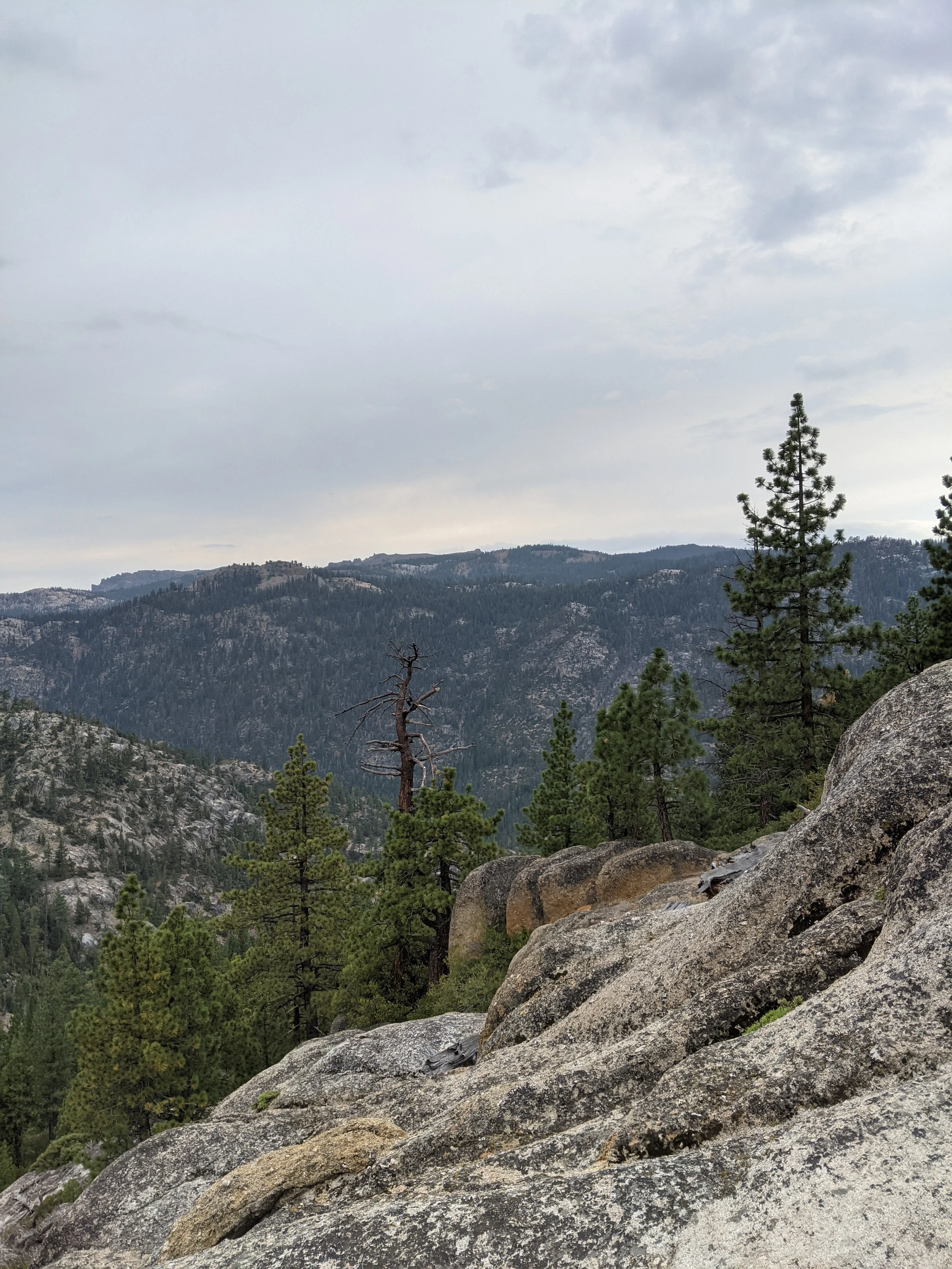
Recently, my family gathered in the beautiful Sierra Nevada mountains in California to scatter my father’s ashes.
While we were there, I found myself thinking once again about the stories he had not recorded.
For more than a decade, I had encouraged my dad to write about his life. He would express interest, but he never completed that project. I suspect the idea of “writing a life story” felt too overwhelming. And even when I offered to gift him a subscription to a company that would send him an email prompt each week to achieve a book in a year, he declined.
I wish that during the final months of his life, he had simply opened an AI tool on his phone and started talking. He could have recorded one memory at a time as they came to him.
The transcripts would not have been perfect and would have needed to be organized. But those fragments would be precious now.
That experience has made me even more convinced that AI can be a valuable tool for preserving personal history. It lowers the barrier to beginning. It gives people who do not think of themselves as writers a way to record stories in their own words.
The resulting materials may not yet be a finished book, but they ensure that the stories exist.
From AI Drafts to a Family Legacy
I am absolutely willing to work with clients who have already partnered with AI tools to produce transcripts, anecdotes, outlines, or preliminary chapters. Those materials can be used alongside additional interviews and materials to create a cohesive life story or family legacy book.
The result can be a professionally written, designed, and beautifully printed book to give to children, grandchildren, siblings, nieces, nephews, friends, and colleagues.
The goal is to create something engaging and readable, not merely a book that sits on a coffee table or remains unopened on a shelf. It can be a book that connects people across generations.
Projects intended for commercial publications may require additional scrutiny, including careful examination of sources, copyright, and how AI-generated language has been used. For private family legacy books, however, AI can be an especially practical and effective starting point. It can help capture memories that might otherwise be lost and make the process of telling a life story feel possible.
AI does not replace the work of creating a meaningful book. But it can preserve the raw material from which a lasting family legacy can be made.
You do not need to wait to begin. If you have stories you want your children or grandchildren to know, start recording them now. And when you are ready to turn those memories into a lasting family book, contact me to discuss what you have gathered and what you hope to create.
